Homogenizer Machines Explained: Working Principles, Applications, and Key Insights
Homogenizer machines are industrial devices used to create uniform mixtures by breaking down particles and dispersing them evenly throughout a liquid. The purpose of homogenization is to ensure consistency in texture, composition, and stability across many types of products. These machines are widely used in fields such as food processing, pharmaceuticals, cosmetics, biotechnology, and chemical manufacturing.
The concept behind homogenization developed as industries began producing complex liquid mixtures that required stable and consistent properties. Early methods involved mechanical stirring, but these approaches often left particles unevenly distributed. Modern homogenizer machines apply high pressure and mechanical forces to break particles into very small sizes, creating stable emulsions or suspensions.
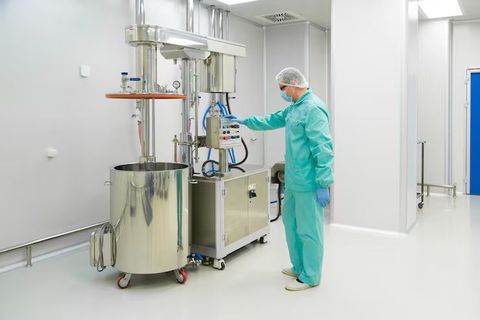
Understanding homogenizer machines explained in simple terms helps readers see how common products—such as milk, lotions, sauces, and certain medicines—achieve smooth textures and stable formulations. The working principles and applications of these machines reveal how industrial processes maintain consistency across large production volumes.
Importance
Homogenizer machines play an important role in modern manufacturing processes. Many industries rely on uniform mixtures to maintain quality, stability, and safety in their products. Without homogenization, ingredients in liquid mixtures may separate over time, affecting texture, appearance, and performance.
In food processing, homogenization helps distribute fat particles evenly in liquids like milk or cream. This process prevents separation and ensures a consistent texture. In pharmaceuticals, homogenizer machines assist in producing stable suspensions and emulsions used in certain medical formulations. Cosmetic products such as creams and lotions also rely on homogenization to maintain smooth textures and evenly dispersed ingredients.
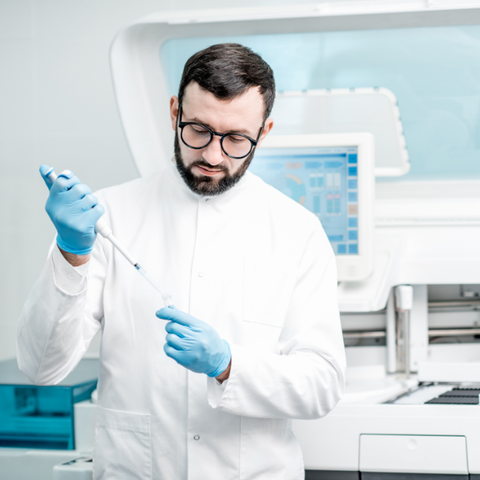
Homogenizer machines also contribute to research and biotechnology activities. Laboratories use smaller homogenization equipment to break down cells, disperse biological samples, or prepare experimental mixtures.
Several everyday challenges are addressed through homogenization processes:
- Maintaining uniform texture in liquid foods
- Stabilizing emulsions that combine oil and water
- Reducing particle size in suspensions
- Improving consistency during large-scale production
- Supporting research involving biological samples
Because of these functions, homogenizer machines are an important component of modern manufacturing systems across many sectors.
Working Principles of Homogenizer Machines
Homogenizer machines operate by applying mechanical energy to a mixture, forcing it through narrow openings under high pressure. This process subjects the liquid to intense forces that break particles into smaller sizes and distribute them evenly.
Pressure-Based Homogenization
One common working principle involves high-pressure homogenization. In this method, a pump forces the liquid mixture through a very small gap or valve. As the mixture passes through this narrow space, several physical forces occur simultaneously:
- Shear forces that tear particles apart
- Turbulence that mixes components rapidly
- Cavitation, where vapor bubbles collapse and break particles
These combined forces reduce particle size and improve mixture stability.
Mechanical Homogenization
Another approach uses mechanical components such as rotating blades or rotor–stator systems. These devices create high-speed movement in the liquid, generating intense mixing forces that disperse particles.
Mechanical homogenization is often used in laboratory environments or smaller production settings where moderate particle size reduction is sufficient.
Ultrasonic Homogenization
Some specialized homogenizer machines use ultrasonic waves to create microscopic bubbles in liquids. When these bubbles collapse, they release energy that disrupts particles and disperses them evenly.
Ultrasonic homogenization is commonly used in laboratory research, particularly in biotechnology and chemistry experiments.
Basic Homogenization Process
Although designs vary, the general process usually follows several steps:
- Preparation stage: ingredients are combined in a preliminary mixture
- Homogenization stage: the mixture passes through the homogenizer machine
- Particle reduction stage: mechanical forces break down larger particles
- Stabilization stage: the mixture becomes uniform and stable
These steps help ensure that ingredients remain evenly distributed throughout the final product.
Applications of Homogenizer Machines
Homogenizer machines are used across a wide range of industries. Their ability to create stable mixtures makes them useful wherever liquids and particles must remain evenly distributed.
Food and Beverage Processing
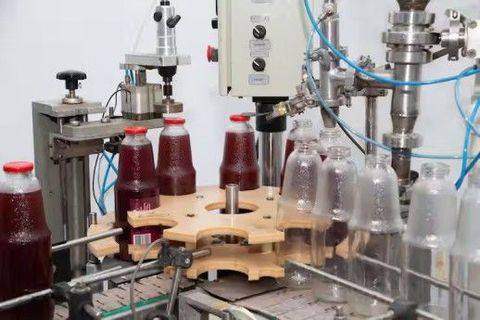
One of the most widely recognized applications involves milk processing. Homogenization breaks down fat globules in milk so that they remain evenly dispersed rather than rising to the surface.
Other food products that often undergo homogenization include:
- Yogurt and dairy beverages
- Sauces and dressings
- Plant-based beverages
- Fruit juices and concentrates
This process improves texture and helps maintain product stability during storage and transportation.
Pharmaceutical Production
Pharmaceutical manufacturers use homogenizer machines to produce stable liquid formulations. These may include suspensions, emulsions, or other mixtures used in medical preparations.
Homogenization supports consistent particle distribution, which can influence the stability and performance of certain formulations.
Cosmetics and Personal Care Products
Cosmetic manufacturing also relies on homogenization technology. Many products combine oil-based and water-based ingredients, which naturally separate without proper mixing.
Homogenizer machines help maintain consistent textures in products such as:
- Moisturizing creams
- Lotions and emulsions
- Hair conditioners
- Skin treatment formulations
Biotechnology and Research
In laboratory environments, homogenization plays a role in biological sample preparation. Scientists may use homogenizers to break open cells, disperse tissue samples, or mix chemical solutions.
These processes support research activities in molecular biology, microbiology, and pharmaceutical development.
Example Applications Table
| Industry | Typical Use of Homogenizer Machines | Result |
|---|---|---|
| Food processing | Milk and beverage homogenization | Uniform texture |
| Pharmaceuticals | Suspension and emulsion preparation | Stable formulations |
| Cosmetics | Cream and lotion mixing | Smooth consistency |
| Biotechnology | Cell disruption and sample mixing | Prepared laboratory samples |
| Chemical processing | Particle dispersion in liquids | Consistent mixtures |
Recent Updates
From recent years into the current period, several trends have influenced the development of homogenizer machines. Manufacturers and researchers are focusing on improving efficiency, automation, and precision in homogenization processes.
One trend involves the integration of digital monitoring systems into industrial homogenizers. Sensors and control software allow operators to track pressure levels, temperature, and particle size during processing. This helps maintain consistent production conditions.
Another development involves energy efficiency improvements. Engineers are designing machines that require less mechanical energy while maintaining effective particle reduction. This approach supports broader sustainability goals in manufacturing environments.
In research settings, compact laboratory homogenizers have become more common. These devices allow scientists to process small sample volumes while maintaining precise control over homogenization conditions.
Automation is also becoming more widespread. Industrial facilities may integrate homogenizer machines into automated production lines where mixing, processing, and packaging occur within coordinated systems.
Overall, current developments focus on improving precision, monitoring capabilities, and operational efficiency in homogenization processes.
Laws or Policies
The use of homogenizer machines is shaped by regulatory frameworks that govern industrial production, food safety, and pharmaceutical manufacturing. These regulations vary across countries but generally focus on product safety, equipment standards, and manufacturing practices.
In food production, homogenization equipment must meet food safety standards established by national regulatory authorities. These standards ensure that equipment materials are suitable for contact with food and that cleaning procedures maintain hygienic conditions.
Pharmaceutical manufacturing is subject to strict regulatory oversight in many regions. Authorities often require compliance with Good Manufacturing Practice (GMP) guidelines. These guidelines outline procedures for equipment operation, sanitation, and quality control.
Cosmetic and personal care manufacturing may also fall under regulatory frameworks that require safe ingredient handling and consistent production processes.
Several policy areas influence homogenizer machine use:
- Equipment sanitation and hygiene requirements
- Manufacturing documentation and quality control procedures
- Safety standards for industrial machinery
- Environmental regulations related to industrial operations
These frameworks aim to ensure that homogenization processes support safe and reliable production.
Tools and Resources
Various tools and resources help professionals and researchers understand homogenizer machines and their applications. These resources support learning, equipment operation, and research activities.
Industry organizations often publish technical guidelines and educational materials that explain homogenization processes. Universities and research institutions also provide open-access publications that describe particle size reduction methods and fluid dynamics principles.
Common resources related to homogenization include:
- Technical manuals explaining homogenizer machine operation
- Online particle size calculators used in research environments
- Academic journals focused on biotechnology and food science
- Equipment documentation describing pressure and flow parameters
- Laboratory protocols for biological sample preparation
Digital platforms used by engineers and researchers may also include simulation tools that model fluid flow and particle dispersion during homogenization.
These tools help improve understanding of homogenization techniques and support accurate experimentation or production planning.
FAQs
What are homogenizer machines used for?
Homogenizer machines are used to create uniform mixtures by reducing particle size and evenly dispersing ingredients in liquids. They are commonly used in food processing, pharmaceutical manufacturing, cosmetics production, and laboratory research.
How do homogenizer machines work?
Homogenizer machines work by forcing liquid mixtures through narrow gaps under high pressure or by applying intense mechanical forces. These actions create shear forces, turbulence, and cavitation that break particles into smaller sizes.
What industries use homogenizer machines?
Industries that commonly use homogenizer machines include food and beverage processing, pharmaceuticals, cosmetics, biotechnology, and chemical manufacturing. Each industry uses homogenization to maintain consistent product mixtures.
What is the main purpose of homogenization in food processing?
The main purpose of homogenization in food processing is to distribute fat or particles evenly throughout a liquid. This process helps maintain uniform texture and prevents separation during storage.
Are laboratory homogenizers different from industrial homogenizer machines?
Laboratory homogenizers are generally smaller and designed for research or experimental use. Industrial homogenizer machines operate at higher capacities to process large volumes in manufacturing environments.
Conclusion
Homogenizer machines are important tools used to create stable and uniform mixtures in many industries. By applying mechanical forces and high pressure, these machines reduce particle size and distribute ingredients evenly within liquids.
Their applications range from food processing and cosmetics manufacturing to pharmaceutical production and scientific research. Developments in automation, monitoring technology, and efficiency continue to influence modern homogenization systems.
Understanding homogenizer machines explained through their working principles, applications, and operational context helps readers recognize how these machines contribute to consistent manufacturing processes across multiple sectors.