Digital Oscilloscope Equipment Overview: Detailed Explanation of Working Principles, Functions, and Signal Testing Insights
Digital oscilloscope equipment overview begins with understanding how electronic signals are observed and interpreted. An oscilloscope is a device used to visualize electrical signals as waveforms, showing how voltage changes over time. This concept developed from early analog instruments, which displayed signals using cathode-ray tubes, and later evolved into digital systems with advanced processing capabilities.
Modern digital oscilloscopes convert analog electrical signals into digital data using internal components such as analog-to-digital converters. This allows signals to be stored, analyzed, and displayed with improved clarity. The purpose of these devices is to help users examine signal behavior, identify patterns, and understand how electronic systems function.
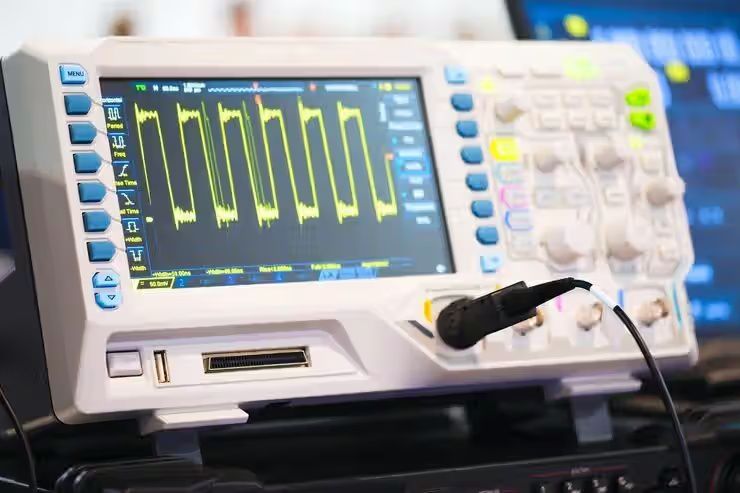
Today, digital oscilloscopes are widely used in electronics, communication systems, education, and research. They provide a practical way to observe invisible electrical activity and translate it into visual information that can be studied and interpreted.
Importance
The relevance of digital oscilloscope equipment continues to grow as electronic devices become more complex. From household electronics to industrial machinery, nearly all modern systems rely on accurate signal transmission and processing. Oscilloscopes help ensure that these signals behave as expected.
Understanding signal behavior is important for detecting issues such as noise, distortion, or unexpected voltage changes. For example, when a device malfunctions, engineers and technicians can use an oscilloscope to trace the source of the problem. This helps reduce errors and supports efficient troubleshooting.
Digital oscilloscopes also play a role in education. Students learning electronics can visually observe concepts like frequency, amplitude, and waveform shapes. This makes abstract ideas easier to understand.
Key areas where oscilloscopes are commonly used include:
- Electronics testing: analyzing circuits and components
- Telecommunications: monitoring signal transmission quality
- Automotive systems: diagnosing electronic control units
- Education and research: demonstrating electrical concepts
Recent Updates
Recent developments in digital oscilloscope equipment focus on improving accuracy, usability, and connectivity. Advances in processing power have enabled faster sampling rates and higher bandwidth, allowing users to capture more detailed signal information.
Another noticeable trend is the integration of digital interfaces. Many oscilloscopes now connect to computers or cloud platforms, enabling remote access and data sharing. This supports collaboration and allows users to store and analyze data more efficiently.
Portable and compact designs have also become more common. Handheld oscilloscopes are now used in fieldwork, making it easier to perform signal testing outside traditional lab environments.
Artificial intelligence and automation features are gradually being incorporated. These tools assist in waveform recognition, error detection, and automated measurements, reducing manual effort and improving consistency.
Laws or Policies
Digital oscilloscope equipment is influenced by various technical standards and regulatory frameworks. These rules are designed to ensure safety, accuracy, and compatibility in electronic testing environments.
In many countries, including India, equipment used for electrical measurement must comply with safety and calibration standards. Organizations such as the Bureau of Indian Standards (BIS) provide guidelines for electronic devices to ensure they operate within defined limits.
Electromagnetic compatibility (EMC) regulations also play a role. These rules ensure that devices do not interfere with other electronic systems. Oscilloscopes used in professional environments must meet these requirements to maintain reliable measurements.
Additionally, calibration policies are important. Regular calibration ensures that measurement results remain accurate over time. Laboratories and industries often follow standardized calibration procedures to maintain consistency.
Tools and Resources
Several tools and resources support the effective use of digital oscilloscope equipment. These help users understand signal testing insights and improve measurement accuracy.
Common tools include:
- Simulation software: programs that model electronic circuits and generate virtual signals for practice
- Data analysis platforms: tools that process waveform data and provide detailed insights
- Online learning resources: tutorials and guides explaining oscilloscope functions and working principles
- Measurement templates: predefined settings for common signal testing scenarios
Some widely used software platforms provide waveform visualization and analysis features. These tools allow users to capture, store, and interpret signal data without needing advanced technical knowledge.
Below is a simple comparison table showing key features of digital oscilloscope types:
| Feature | Basic Models | Advanced Models |
|---|---|---|
| Sampling Rate | Moderate | High |
| Bandwidth | Limited | विस्तृत (wide range) |
| Storage Capability | Basic memory | Large storage capacity |
| Connectivity | USB | USB, LAN, cloud |
| Automation Features | Minimal | Advanced analysis tools |
These resources help users better understand signal behavior and improve their ability to perform accurate measurements.
FAQs
What is digital oscilloscope equipment and how does it work?
Digital oscilloscope equipment captures electrical signals and converts them into digital data. This data is then displayed as waveforms, allowing users to analyze voltage changes over time.
What are the main functions of a digital oscilloscope?
The main functions include signal visualization, measurement of voltage and frequency, waveform analysis, and detection of signal irregularities such as noise or distortion.
How are working principles of digital oscilloscopes different from analog ones?
Digital oscilloscopes use analog-to-digital conversion to process signals, while analog oscilloscopes display signals directly. Digital systems allow storage, analysis, and advanced processing of waveform data.
Why are signal testing insights important in electronics?
Signal testing insights help identify issues in electronic systems, such as incorrect voltage levels or timing problems. This improves reliability and supports accurate troubleshooting.
Can beginners understand digital oscilloscope equipment easily?
Yes, many modern oscilloscopes include user-friendly interfaces and guided measurement features. With basic learning resources, beginners can understand fundamental concepts and functions.
Conclusion
Digital oscilloscope equipment provides a practical way to observe and analyze electrical signals. Its working principles combine signal conversion, data processing, and waveform visualization to deliver clear insights. These tools are important in modern electronics, supporting testing, learning, and system analysis. As technology evolves, digital oscilloscopes continue to become more accessible and capable, helping users understand complex signal behavior.