Laboratory Testing Equipment: Learn About Equipment Types, Functions, and Techniques
Laboratory testing equipment plays an important role in scientific research, industrial production, quality control, environmental monitoring, and product development. These tools help scientists and technicians measure properties, examine samples, identify substances, and evaluate whether materials meet specific quality requirements. Laboratories use many types of equipment, ranging from simple measuring instruments and glassware to advanced analytical systems. Each instrument serves a particular purpose. A balance measures mass, a microscope helps examine small structures, a centrifuge separates sample components, and a spectrophotometer measures how a material interacts with light.
What Is Laboratory Testing Equipment?
Laboratory testing equipment refers to the instruments, machines, tools, and supporting devices used to prepare, measure, examine, and analyze samples under controlled conditions.
These samples may include liquids, powders, metals, plastics, food products, water, soil, biological specimens, and pharmaceutical materials.
Laboratory equipment can be grouped into several broad categories:
Measuring equipment: Determines mass, volume, temperature, acidity, and other physical properties.
Sample preparation equipment: Helps prepare samples before testing.
Analytical instruments: Identifies substances or measures their chemical and physical characteristics.
Environmental control equipment: Maintains conditions such as temperature and humidity.
Testing machines: Evaluate mechanical strength, durability, or other performance characteristics.
Safety equipment: Helps protect laboratory workers, samples, and the surrounding environment.
Many laboratories use several categories together. A single testing process may involve weighing a sample, preparing it, controlling its temperature, measuring its properties, and recording the results.
1. Measuring and Weighing Equipment
Accurate measurement is essential in laboratory work. Small errors in mass, volume, or temperature can affect test results, particularly when working with concentrated solutions, small samples, or precise formulations.
Analytical Balances
An analytical balance measures the mass of a sample with high precision. Many models use an enclosed weighing chamber to reduce the effects of air movement and environmental disturbances.
These balances are used in chemical analysis, pharmaceutical research, formulation development, and material testing.
The required balance depends on the sample size, the accuracy needed, and the weighing procedure. Regular calibration or verification helps confirm that the instrument provides suitable results.
Pipettes and Micropipettes
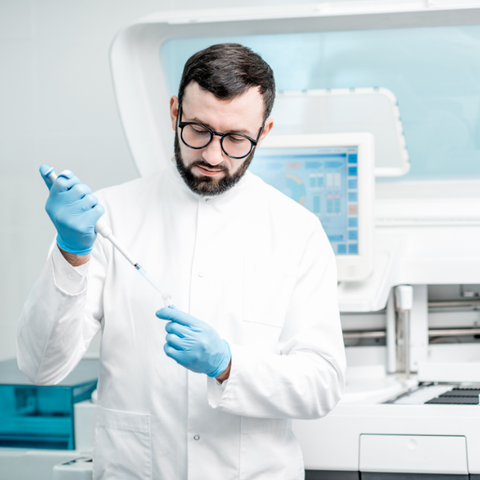
Pipettes transfer measured amounts of liquid from one container to another. Micropipettes are designed for smaller volumes, often used in molecular biology, chemistry, and other specialized laboratory work.
They help technicians prepare solutions, distribute reagents, and handle samples consistently.
Pipettes must be compatible with the required volume range and liquid properties. Proper technique, suitable tips, cleanliness, and periodic performance checks help reduce measurement errors.
Measuring Cylinders and Volumetric Flasks
Measuring cylinders are used to measure liquid volumes for general laboratory tasks. Volumetric flasks are designed to contain a specific volume at a defined temperature and are commonly used when preparing solutions that require greater volumetric accuracy.
The choice between them depends on the measurement requirements and the test method.
Thermometers and Temperature Sensors
Temperature-measuring instruments help monitor sample conditions and equipment performance. Depending on the application, laboratories may use digital thermometers, temperature probes, thermocouples, or calibrated data loggers.
Temperature monitoring is particularly important when testing materials whose properties change with heating or cooling.
2. Microscopes and Imaging Equipment
Microscopy equipment allows users to examine structures that cannot be observed clearly with the unaided eye. It is used in biological research, materials science, education, manufacturing, and quality inspection.
Optical Microscopes
Optical microscopes use visible light and lenses to magnify a sample. They can help users examine cells, fibers, particles, tissue sections, and other small structures.
Different configurations provide different magnification ranges, contrast methods, and viewing arrangements.
Digital Microscopes
Digital microscopes capture images through a camera and display them on a screen. Depending on the system, images can be stored, measured, annotated, and compared.
These instruments are useful for inspection, documentation, training, and certain quality-control applications.
Electron Microscopes
Electron microscopes use beams of electrons rather than visible light to produce images. They can reveal much finer structural details than conventional optical microscopes.
Two major types are scanning electron microscopes, which examine surface features, and transmission electron microscopes, which can reveal internal structures in suitably prepared thin samples.
Electron microscopy requires specialized equipment, sample preparation, trained operators, and controlled operating conditions.
Common Applications
Microscopy can help laboratories examine material defects, identify visible contamination, study biological structures, inspect particles, and document changes in samples.
The appropriate microscope depends on the size of the features being examined, the sample type, and the information required.
3. Chemical Analysis Equipment
Chemical analysis equipment helps laboratories identify substances, measure concentrations, and evaluate the composition of materials.
These instruments are widely used in chemical manufacturing, food testing, environmental monitoring, pharmaceutical development, and materials research.
pH Meters
A pH meter measures how acidic or alkaline a solution is. It commonly uses an electrode system to determine pH.
Laboratories use pH meters when preparing solutions, testing water, examining food products, and monitoring chemical processes.
Reliable measurements depend on appropriate calibration, electrode condition, temperature considerations, and proper sample handling.
Spectrophotometers
A spectrophotometer measures how much light a sample absorbs or transmits at selected wavelengths.
The results can help determine the concentration of certain substances when the method and sample are suitable. Spectrophotometers are used in chemical analysis, environmental testing, life sciences, and product quality control.
Different instruments cover different wavelength ranges and applications, so the selected method must match the substance being analyzed.
Chromatography Systems
Chromatography separates components in a mixture so they can be identified or measured.
Two widely used techniques are:
High-performance liquid chromatography (HPLC): Uses a liquid mobile phase to separate compounds as they pass through a column.
Gas chromatography (GC): Uses a gas mobile phase to separate suitable volatile compounds.
Chromatography systems are used to analyze complex mixtures in pharmaceuticals, food products, environmental samples, chemicals, and other materials.
Mass Spectrometers
Mass spectrometry measures ions according to their mass-to-charge ratio. Combined with suitable sample preparation and separation techniques, it can help identify compounds and measure specific substances.
Mass spectrometry is used in research, chemical analysis, pharmaceutical testing, environmental monitoring, and specialized biological studies.
Because these systems can be technically complex, they often require trained operators, method development, reference materials, and regular performance checks.
4. Sample Preparation Equipment
Before a sample can be tested, it may need to be mixed, separated, ground, filtered, diluted, or otherwise prepared. Sample preparation is important because poor preparation can introduce errors even when the analytical instrument is working correctly.
Centrifuges
A centrifuge spins samples at controlled speeds to separate components according to their behavior under centrifugal force.
Different centrifuges and rotors are designed for different sample types, tube formats, and separation requirements.
They are used in biological research, clinical laboratories, food analysis, chemical testing, and industrial applications.
Homogenizers
Homogenizers help distribute components more evenly throughout a sample. They may use mechanical movement, high-speed rotation, pressure, or other methods depending on the design.
They are useful when preparing emulsions, suspensions, biological samples, and mixtures that need consistent composition.
Magnetic Stirrers and Shakers
Magnetic stirrers mix liquids using a rotating magnetic field and a stir bar. Shakers move containers in a controlled pattern to support mixing or other procedures.
The appropriate equipment depends on the sample's viscosity, volume, container, and mixing requirements.
Grinders and Mills
Grinding equipment reduces the size of solid materials to make them suitable for analysis or processing.
Laboratories may use mills to prepare minerals, food materials, polymers, pharmaceutical ingredients, and other solids. The grinding method must be selected carefully to avoid contamination, excessive heating, or unwanted changes to the sample.
Filtration Equipment
Filtration systems separate particles from liquids or gases using suitable filter media.
They are used in sample preparation, water testing, chemical processing, and other laboratory tasks. Filter selection depends on particle size, chemical compatibility, flow requirements, and the intended purpose of the test.
5. Temperature Control and Heating Equipment
Many laboratory tests require specific temperature conditions. Heating and cooling equipment helps maintain those conditions during sample preparation, incubation, testing, or storage.
Laboratory Ovens
Laboratory ovens provide controlled heating for suitable materials. They may be used for drying samples, conditioning materials, or performing defined heat-related tests.
The required temperature range, temperature uniformity, ventilation, and chamber size should match the intended application.
Incubators
Incubators maintain controlled environmental conditions, commonly including temperature. Some models also regulate carbon dioxide or humidity.
They are used in biological research, microbiology, cell culture, and other applications where controlled incubation is required.
Water Baths
Water baths maintain samples at a relatively stable temperature using a heated water reservoir.
They are used for temperature-controlled sample preparation, reagent warming, and certain laboratory tests. The appropriate bath depends on the required temperature range, sample containers, and control accuracy.
Refrigerators and Freezers
Laboratory refrigerators and freezers preserve samples, reagents, standards, and other temperature-sensitive materials.
Different materials may require different storage conditions. Temperature monitoring, alarms, suitable storage organization, and contingency planning help protect sample integrity.
Autoclaves
Autoclaves use pressurized steam under defined conditions to sterilize suitable equipment, materials, and laboratory waste.
They are used in laboratories, healthcare settings, and research facilities. Effective sterilization depends on the material, load arrangement, cycle, and validated operating conditions.
Not every material can withstand steam sterilization, so compatibility must be checked before use.
6. Mechanical and Material Testing Equipment
Mechanical testing equipment evaluates how materials respond to forces, movement, impact, or repeated loading. These tests are important in manufacturing, construction, automotive production, aerospace, packaging, and product development.
Universal Testing Machines
A universal testing machine applies controlled tensile or compressive forces to a specimen. Depending on the setup, it can measure properties such as strength, stiffness, elongation, and deformation.
These machines are used to test metals, plastics, rubber, textiles, composites, and other materials.
The specimen shape, testing speed, fixtures, and measurement method must follow the applicable test requirements.
Hardness Testers
Hardness testers evaluate a material's resistance to indentation, penetration, or another defined form of surface deformation.
Different methods are used for metals, polymers, coatings, and other materials. Results from different hardness scales are not automatically interchangeable.
Impact Testing Machines
Impact testing machines measure how a material responds to a sudden applied force. They can help evaluate resistance to fracture or energy absorption under specified conditions.
These tests are important when products may experience shocks or rapid loading during use.
Environmental Test Chambers
Environmental chambers expose samples to controlled conditions such as temperature and humidity. Some specialized systems can also reproduce cycling conditions or other environmental stresses.
They are used to evaluate material stability, product durability, packaging performance, and the behavior of electronic or industrial components.
7. Electrical and Electronic Testing Equipment
Electrical testing equipment measures electrical properties and helps verify whether components or systems perform according to defined specifications.
Digital Multimeters
A digital multimeter can measure electrical quantities such as voltage, current, and resistance, depending on its design and range.
It is commonly used in electronics laboratories, engineering workshops, and equipment maintenance.
Oscilloscopes
Oscilloscopes display electrical signals over time. They help engineers examine signal shape, timing, frequency-related behavior, noise, and other characteristics.
They are useful for diagnosing circuit behavior and evaluating electronic systems.
Insulation Resistance Testers
Insulation resistance testers assess the resistance of electrical insulation using a defined test voltage.
They are used in electrical maintenance and equipment testing. The test voltage and procedure must be appropriate for the equipment being evaluated.
Specialized Electronic Test Systems
Depending on the application, laboratories may use spectrum analyzers, signal generators, power analyzers, component testers, and automated test systems.
Instrument selection depends on the signal range, accuracy requirements, measurement bandwidth, and applicable standards.
8. Biological and Microbiological Laboratory Equipment
Biological laboratories require equipment designed for handling biological samples and maintaining suitable working conditions. The equipment needed depends on the organisms, materials, and procedures involved.
Biological Safety Cabinets
Biological safety cabinets provide a controlled work area designed to protect personnel, samples, and, depending on the cabinet class, the surrounding environment from particular biological hazards.
They are not interchangeable with ordinary clean benches or chemical fume hoods. The appropriate cabinet must be selected according to the hazard assessment and work being performed.
Petri Dishes and Culture Equipment
Petri dishes are shallow containers commonly used for suitable culture and observation tasks. They may be used with appropriate media in microbiology and other laboratory applications.
Culture equipment must be compatible with the intended method and maintained under suitable conditions to reduce contamination risks.
Colony Counters
Colony counters assist with counting visible colonies on culture plates. Some systems are manual, while others use digital imaging and automated analysis.
The quality of the result depends on sample preparation, the counting method, and the instrument's ability to distinguish colonies correctly.
Polymerase Chain Reaction Equipment
Polymerase chain reaction (PCR) instruments amplify selected DNA sequences through repeated temperature-controlled cycles. Real-time PCR systems can also monitor amplification as it occurs.
These instruments are used in molecular biology, research, selected diagnostic workflows, and other applications that require nucleic acid analysis.
The method requires suitable controls, contamination prevention, validated procedures, and trained personnel.
Comparison of Common Laboratory Testing Equipment
| Equipment | Main function | Common applications |
|---|---|---|
| Analytical balance | Measures mass | Chemical analysis and formulation |
| Micropipette | Transfers measured liquid volumes | Research and sample preparation |
| Microscope | Magnifies small structures | Biological and material examination |
| pH meter | Measures acidity or alkalinity | Water, chemical, and food testing |
| Spectrophotometer | Measures light absorption or transmission | Chemical and biological analysis |
| Centrifuge | Separates sample components | Sample preparation |
| Chromatography system | Separates mixture components | Chemical and pharmaceutical analysis |
| Laboratory oven | Provides controlled heating | Drying and material conditioning |
| Incubator | Maintains controlled conditions | Biological and microbiological work |
| Autoclave | Sterilizes suitable materials | Laboratory and healthcare settings |
| Universal testing machine | Applies controlled mechanical forces | Material strength and deformation testing |
| Environmental chamber | Controls environmental conditions | Product and material testing |
| Digital multimeter | Measures electrical quantities | Electrical and electronic testing |
This table provides a general overview. Actual equipment requirements vary according to the laboratory's field, sample types, and test methods.
Common Laboratory Testing Techniques
Equipment provides the measurements, but testing techniques determine how those measurements are obtained and interpreted.
1. Gravimetric Analysis
Gravimetric analysis uses mass measurements to determine the amount of a substance or a change in material mass.
It may involve weighing a sample or measuring the mass of a substance separated from a mixture. Reliable results depend on suitable preparation, controlled conditions, and accurate weighing.
2. Volumetric Analysis
Volumetric analysis measures the volume of a solution required to react with or quantify another substance. Titration is a common example.
The method can be used to determine concentration or other chemical properties when the reaction and endpoint can be measured appropriately.
3. Spectroscopic Analysis
Spectroscopic techniques examine how matter interacts with electromagnetic radiation. Depending on the method, they can provide information about composition, concentration, molecular structure, or material characteristics.
Examples include ultraviolet-visible spectroscopy, infrared spectroscopy, and atomic spectroscopy.
4. Chromatographic Analysis
Chromatography separates components within a mixture. The separated components can then be detected and, where the method allows, identified or quantified.
The choice of technique depends on properties such as volatility, polarity, molecular characteristics, and sample composition.
5. Microscopic Examination
Microscopy is used to examine the size, shape, structure, and distribution of features within a sample.
It can support material inspection, biological research, particle analysis, and quality-control activities. Sample preparation and imaging conditions influence what can be observed.
6. Mechanical Testing
Mechanical testing applies controlled forces or deformation to measure how a material responds.
Depending on the test, the results may describe strength, hardness, elasticity, elongation, impact resistance, or other mechanical properties.
7. Environmental Testing
Environmental testing evaluates how materials or products perform under specified conditions, such as heat, cold, humidity, or temperature cycling.
The results can help assess durability and identify weaknesses, provided the test conditions represent the intended evaluation.
How to Choose the Right Laboratory Testing Equipment
Choosing laboratory equipment requires a clear understanding of the testing objective. A technically advanced instrument is not always the best choice if it exceeds the laboratory's needs or cannot be maintained properly.
Define the Testing Requirement
Identify what needs to be measured, the sample type, the required measurement range, and the accuracy needed.
A laboratory testing water acidity has different equipment needs from a facility measuring the tensile strength of metals or analyzing complex chemical mixtures.
Check Accuracy and Repeatability
Accuracy describes how close a measurement is to an accepted reference value. Repeatability describes the consistency of results under the same defined conditions.
Review the instrument's specifications, measurement range, resolution, and performance under the intended test conditions.
Consider Sample Compatibility
Samples may be corrosive, viscous, volatile, heat-sensitive, or easily contaminated. Equipment and sample-contact materials must be suitable for the substances being tested.
Also consider sample volume, throughput, cleaning requirements, and any special containment needs.
Evaluate Calibration and Maintenance
Laboratory instruments need appropriate calibration or verification, maintenance, and performance checks. Some equipment may also require periodic certification or specialist servicing.
Before purchasing, check whether suitable service providers, spare parts, calibration standards, and technical support are available.
Review Software and Data Handling
Modern instruments may include software for collecting measurements, creating reports, storing results, and monitoring instrument performance.
Consider data security, export options, audit trails, integration with laboratory information management systems, and the ability to retrieve records when required.
Compare Total Ownership Costs
The purchase price is only one part of the cost. Consumables, reagents, calibration, servicing, software licenses, training, energy use, and downtime can all affect long-term expenses.
A complete cost assessment helps laboratories plan budgets and avoid equipment that becomes difficult to operate or maintain.
Laboratory Equipment Calibration and Quality Control
Reliable laboratory results depend on more than the instrument itself. Equipment must be suitable for the method, properly maintained, and used under controlled conditions.
Calibration
Calibration compares an instrument's measurements with reference standards under specified conditions. It helps establish the relationship between instrument readings and reference values.
Calibration does not automatically correct every measurement error. If an instrument is found to be outside its acceptable limits, the laboratory may need to adjust it, repair it, assess affected results, or take other corrective action.
Verification and Performance Checks
Routine checks help confirm that an instrument continues to perform as expected between scheduled calibration activities.
The frequency and type of checks depend on the equipment, how it is used, the manufacturer's guidance, and the laboratory's quality requirements.
Standardized Testing Methods
Following a defined method helps laboratories produce results that can be compared over time or between locations. Methods may specify sample preparation, equipment settings, environmental conditions, calculations, and reporting requirements.
Documentation and Traceability
Laboratories should retain relevant records of calibration, maintenance, test conditions, sample identification, results, and corrective actions.
Traceable records make it easier to investigate unexpected results and demonstrate that testing was performed under appropriate conditions.
Laboratory Safety and Equipment Maintenance
Laboratory safety is essential because testing may involve chemicals, biological materials, heat, pressure, electrical equipment, or moving parts.
Important practices include:
Select personal protective equipment according to the hazards present.
Use suitable fume hoods or biological safety cabinets when required.
Inspect electrical connections, cables, guards, and mechanical components.
Follow manufacturer instructions for operation, cleaning, and maintenance.
Store chemicals and samples under suitable conditions.
Label samples clearly and manage laboratory waste according to applicable requirements.
Train personnel before they operate specialized instruments.
Keep records of inspections, maintenance, and incidents.
Equipment should be used only for applications it is designed and rated to handle. Safety controls, protective devices, and containment systems should not be bypassed.
Industries That Use Laboratory Testing Equipment
Laboratory equipment supports many sectors, each with different testing priorities.
Pharmaceuticals: Used for raw-material checks, formulation studies, chemical analysis, stability testing, and quality control.
Food and beverages: Helps evaluate composition, acidity, moisture, texture, contamination indicators, and product consistency.
Environmental monitoring: Supports the analysis of water, soil, air samples, and other environmental materials.
Construction and materials: Used to assess cement, concrete, metals, plastics, aggregates, coatings, and other materials.
Automotive and aerospace: Supports mechanical testing, electrical measurements, material inspection, and environmental performance assessments.
Electronics: Helps measure circuit behavior, inspect components, test electrical properties, and assess product reliability.
Research and education: Enables experiments, measurement, observation, and the development of new materials, methods, and technologies.
The instruments used in each sector depend on its testing standards, sample types, and quality requirements.
Frequently Asked Questions
What are the main types of laboratory testing equipment?
Common categories include measuring instruments, analytical systems, sample preparation tools, microscopy equipment, temperature-control devices, mechanical testing machines, electrical test instruments, and safety equipment.
What is the most commonly used laboratory equipment?
Balances, pipettes, glassware, microscopes, pH meters, centrifuges, heating equipment, and storage devices are common in many laboratories. However, the exact equipment list depends on the type of laboratory and its testing activities.
What is the difference between laboratory equipment and analytical instruments?
Laboratory equipment is a broad category that includes tools used for preparation, measurement, storage, safety, and testing. Analytical instruments are a subset focused on identifying substances or measuring their chemical or physical properties.
Why is calibration important?
Calibration helps establish how instrument readings relate to reference values. It supports measurement reliability and helps laboratories identify instruments that may require adjustment, repair, or further investigation.
How often should laboratory equipment be maintained?
Maintenance schedules depend on the instrument, usage, manufacturer recommendations, and applicable quality requirements. Some equipment needs frequent inspections, while other devices may follow scheduled preventive-maintenance intervals.
How can laboratories improve testing accuracy?
Laboratories can improve measurement reliability by using suitable equipment, following standardized methods, controlling environmental conditions, maintaining instruments, training personnel, and documenting results and deviations.
What should a laboratory consider before purchasing equipment?
Important considerations include testing requirements, accuracy, sample compatibility, capacity, calibration needs, maintenance costs, operator training, software capabilities, safety requirements, and technical support.
Conclusion
Laboratory testing equipment provides the tools needed to measure, examine, and evaluate materials across scientific, industrial, and research environments. From balances and microscopes to chromatography systems and mechanical testing machines, each instrument serves a specific purpose within the testing process.
Reliable results depend on selecting suitable equipment, preparing samples correctly, following consistent techniques, maintaining controlled conditions, and keeping accurate records. Calibration, maintenance, safety procedures, and quality control are equally important because even advanced instruments can produce misleading results when used incorrectly.