Concrete Vibrators Overview: Working Principles, Key Facts, and Informative Insights
Concrete is widely used in construction because it can be shaped into many forms and becomes strong after hardening. However, freshly mixed concrete often contains small air pockets and gaps that can weaken the final structure if they remain trapped inside. Concrete vibrators are tools designed to address this issue by helping the mixture settle properly.
Concrete vibrators work by producing rapid vibrations that move through the wet concrete. These vibrations help trapped air escape and allow the mixture to spread evenly around reinforcement bars and formwork. As a result, the concrete becomes denser and more uniform.
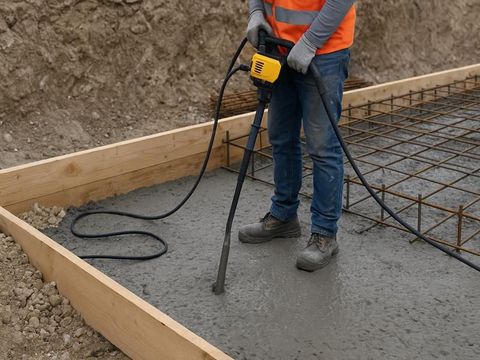
The development of these tools is connected to the growth of modern construction methods during the twentieth century. As buildings, bridges, and infrastructure projects increased in scale, engineers needed reliable ways to ensure strong and consistent concrete placement. Concrete vibrators became an important part of this process.
Today, these tools are commonly used in projects such as building foundations, road construction, bridge structures, and precast concrete manufacturing. Their role is closely tied to improving structural stability and reducing defects during the concrete placement stage.
Importance
Concrete vibrators play a key role in maintaining the quality and durability of concrete structures. When concrete is poured into molds or formwork, it may not naturally fill every space. Air pockets, also known as voids, can form around reinforcement bars or along the edges of forms.
If these voids remain in the hardened material, they may reduce structural strength and increase the chance of cracks or surface defects. Vibrating the concrete helps remove trapped air and ensures the mixture flows into all parts of the form.
Several practical benefits explain why these tools are widely used:
- Improved density: Vibrations help particles settle more closely together, producing stronger hardened concrete.
- Better bonding with reinforcement: Concrete flows around steel bars and embedded materials more effectively.
- Reduced surface imperfections: Air bubbles that reach the surface can create holes or uneven textures.
- Consistent structural performance: Uniform concrete distribution supports predictable load-bearing properties.
For everyday infrastructure such as roads, buildings, and drainage systems, proper concrete consolidation helps reduce long-term maintenance issues. This makes the use of concrete vibrators an important step in many construction workflows.
Recent Updates
Recent developments in construction technology have influenced how concrete vibrators are designed and used. Advances from 2024–2026 largely focus on efficiency, energy use, and improved monitoring during concrete placement.
One trend involves the use of battery-powered vibration equipment. These models aim to reduce reliance on external power cables and allow easier movement on construction sites. Portable systems can simplify work in areas where access to electricity is limited.
Another development involves vibration monitoring tools integrated into construction equipment. Sensors may measure vibration frequency and duration, helping operators maintain consistent consolidation across large areas of concrete.
Digital construction management platforms also contribute to improvements. In some projects, vibration processes are recorded as part of quality documentation, allowing project teams to track how concrete was handled during placement.
Environmental considerations are another factor shaping equipment design. Some modern tools focus on reduced noise levels and improved energy efficiency. These changes reflect broader efforts across the construction sector to improve safety and environmental performance.
Laws or Policies
Construction activities involving concrete placement are influenced by building regulations and engineering standards in many countries. These guidelines help ensure that structures meet safety and durability requirements.
In India, several standards developed by the Bureau of Indian Standards provide guidance on concrete quality and construction practices. Documents such as the IS 456 Plain and Reinforced Concrete Code outline general principles for reinforced concrete structures.
These standards discuss topics such as:
- Proper concrete mixing and placement
- Adequate compaction and consolidation methods
- Structural strength requirements
- Testing and quality verification
Compaction methods, including vibration, are described as part of the process of removing air voids from fresh concrete. Following these guidelines helps reduce structural defects and supports consistent construction quality.
Many large infrastructure projects also follow additional engineering standards or project-specific specifications. Government agencies, contractors, and engineers use these rules to ensure that concrete structures meet safety expectations.
Tools and Resources
Several tools and technical resources help construction professionals understand and manage concrete vibration processes. These resources range from measurement devices to digital planning platforms.
Types of Concrete Vibrators
Concrete vibrators can be categorized based on how they transmit vibrations to the concrete mixture.
| Type of Vibrator | Description | Common Usage |
|---|---|---|
| Internal (Needle) Vibrator | A vibrating probe inserted directly into wet concrete | Foundations, columns, beams |
| External Vibrator | Attached to the outside of formwork to transmit vibration | Precast molds and thin sections |
| Surface Vibrator | Placed on the surface of freshly poured concrete | Slabs and pavements |
| Vibrating Table | A platform that vibrates molds placed on it | Precast components and laboratory testing |
Each type serves different construction situations depending on the thickness of concrete and the formwork arrangement.
Monitoring and Measurement Tools
Modern construction projects may use measurement equipment to maintain consistent vibration performance. Examples include:
- Frequency meters: measure vibration cycles per minute
- Concrete slump testing tools: evaluate concrete workability
- Digital construction tracking platforms: record placement procedures
- Structural inspection devices: assess concrete quality after curing
Engineering guidelines and technical manuals are also widely used resources. Publications from organizations such as the American Concrete Institute provide educational material explaining proper concrete consolidation methods.
FAQs
What are concrete vibrators and why are they used?
Concrete vibrators are tools that create rapid vibrations within freshly placed concrete. The vibration helps trapped air escape and allows the mixture to settle evenly, improving density and structural stability.
How do concrete vibrators work in construction?
Concrete vibrators operate by generating high-frequency oscillations. When the vibrating probe or surface touches the concrete, the energy moves through the mixture, reducing internal friction and allowing particles to reposition more tightly together.
What happens if concrete is not properly vibrated?
If concrete is not consolidated properly, air voids can remain inside the hardened material. These voids may reduce strength, create surface holes, and increase the risk of long-term structural problems.
Are there different types of concrete vibrators?
Yes, several types exist, including internal vibrators, external vibrators, surface vibrators, and vibrating tables. Each type is designed for specific construction situations depending on the depth and shape of the concrete placement.
How long should concrete be vibrated during placement?
The duration depends on factors such as concrete consistency, formwork design, and reinforcement density. In many cases, vibration continues until visible air bubbles stop rising and the surface becomes smooth and uniform.
Conclusion
Concrete vibrators are tools used to improve the quality of freshly placed concrete by removing trapped air and helping the mixture settle evenly. Their working principles rely on high-frequency vibrations that increase concrete density and reduce structural defects.
These tools play an important role in construction projects ranging from building foundations to infrastructure development. Advances in equipment design, monitoring systems, and construction technology continue to shape how concrete vibration is performed.
Understanding the working principles and applications of concrete vibrators helps explain why proper concrete consolidation remains a fundamental part of modern construction practices.