Homogenizer Machines Explained: Working Principles, Applications, and Key Insights
Homogenizer machines are industrial systems designed to reduce particle size and evenly distribute substances within a mixture. Their main purpose is to create a uniform composition by breaking down particles, droplets, or cells so that materials remain stable and consistent over time.
These machines exist because many liquids and semi-liquids naturally separate due to differences in density, size, or structure. Without homogenization, products such as dairy items, pharmaceutical solutions, chemical emulsions, and cosmetic formulations would separate, degrade, or lose performance.
Homogenizer machines use controlled mechanical force to ensure consistency, improved texture, and predictable behavior across a wide range of industrial processes.
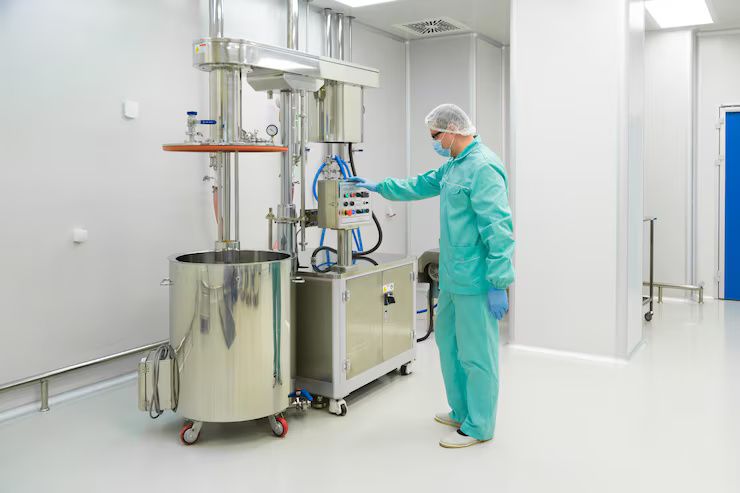
Why Homogenizer Machines Matter Today
Homogenization plays a critical role in modern production environments where quality, safety, and repeatability are essential. Industries increasingly depend on uniform mixtures to meet performance standards and regulatory expectations.
Key reasons this technology is important today include:
-
Product Stability: Prevents separation, sedimentation, and phase breakdown
-
Improved Texture: Enhances smoothness and consistency
-
Process Efficiency: Enables predictable downstream processing
-
Quality Control: Maintains uniform performance across batches
-
Extended Shelf Integrity: Supports long-term product reliability
Homogenizer machines affect sectors such as food processing, pharmaceuticals, biotechnology, chemicals, cosmetics, and materials research. They solve problems related to inconsistency, poor dispersion, and unreliable end-product behavior.
Working Principles of Homogenizer Machines
Homogenizer machines operate by forcing materials through narrow gaps at high pressure or high speed. This action creates intense mechanical forces that break particles into smaller, evenly distributed sizes.
Core mechanisms involved:
-
Shear Force: Caused by velocity differences in fluid layers
-
Impact Force: Generated when particles collide with surfaces
-
Turbulence: Disrupts particle clusters
-
Cavitation: Formation and collapse of microbubbles that break particles
| Component | Function |
|---|---|
| High-pressure pump | Drives material through the system |
| Homogenizing valve | Controls pressure and particle reduction |
| Pressure chamber | Generates mechanical energy |
| Cooling system | Prevents overheating |
| Control gauges | Monitor operational stability |
These combined forces result in a stable and uniform mixture suitable for sensitive applications.
Major Types of Homogenizer Machines
Different industries use different homogenizer designs depending on material properties and desired outcomes.
| Type | Primary Use | Key Feature |
|---|---|---|
| High-pressure homogenizer | Liquids and emulsions | Extremely fine particle reduction |
| Ultrasonic homogenizer | Laboratory and biotech | Uses sound waves |
| Mechanical homogenizer | General industrial mixing | Rotating blades or rotors |
| Colloid mill | Semi-solids and pastes | High shear grinding |
| Microfluidizer | Advanced formulations | Controlled micro-channels |
Each type addresses specific challenges related to viscosity, sensitivity, and precision.
Recent Developments and Industry Trends
Over the past year, homogenizer machine technology has continued to evolve with a focus on efficiency, control, and sustainability.
| Year | Development | Industry Impact |
|---|---|---|
| 2024 | Energy-optimized pressure systems | Reduced power consumption |
| 2024 | Advanced material seals | Improved hygiene and durability |
| 2025 | Smart monitoring integration | Real-time performance tracking |
| 2025 | Modular system designs | Easier configuration flexibility |
Recent research emphasizes reduced heat generation, improved cleaning efficiency, and enhanced precision for sensitive biological materials. Industries are also moving toward systems that support traceability and process transparency.
Regulations, Standards, and Safety Frameworks
Homogenizer machines are subject to strict safety and quality standards, especially in regulated industries.
Key regulatory frameworks include:
-
ISO 22000: Food safety management systems
-
GMP Guidelines: Manufacturing quality control for pharmaceuticals
-
FDA Equipment Standards: Hygiene and material compatibility
-
EHEDG Guidelines: Sanitary equipment design
-
CE and IEC Standards: Mechanical and electrical safety compliance
Governments and regulatory bodies emphasize cleanability, pressure containment, operator protection, and documentation. Proper training, routine inspection, and compliance reporting are essential components of lawful operation.
Industrial Applications of Homogenizer Machines
Homogenizer machines support a wide range of industrial and research applications.
Common application areas include:
-
Food Processing: Dairy, beverages, sauces, and emulsions
-
Pharmaceutical Production: Suspensions, vaccines, and injectables
-
Biotechnology: Cell disruption and protein extraction
-
Chemical Manufacturing: Polymers, coatings, and dispersions
-
Cosmetics: Creams, lotions, and serums
| Industry | Purpose |
|---|---|
| Food & beverage | Texture consistency and stability |
| Healthcare | Uniform dosage distribution |
| Chemicals | Improved material performance |
| Research labs | Controlled experimentation |
| Cosmetics | Smooth formulation quality |
Tools and Learning Resources
Understanding homogenizer machines is supported by reliable educational and technical resources.
Helpful learning resources include:
-
Engineering textbooks on fluid mechanics and particle dynamics
-
Industrial processing journals and peer-reviewed studies
-
University research publications on dispersion technology
-
Government safety manuals and compliance documents
-
Equipment operation guides and maintenance checklists
Practical reference tools include:
-
Pressure-to-particle-size reference tables
-
Material compatibility charts
-
Preventive maintenance templates
-
Process validation documentation formats
These resources support informed decision-making and safe operation practices.
Frequently Asked Questions
What is the main purpose of a homogenizer machine?
Its purpose is to create a stable, uniform mixture by reducing particle size and preventing separation.
How does homogenization improve product quality?
It enhances consistency, texture, and reliability while reducing defects and instability.
Are homogenizer machines used only for liquids?
No. They are also used for semi-solids, emulsions, suspensions, and biological materials.
Why is pressure control important in homogenization?
Proper pressure ensures effective particle reduction without damaging sensitive materials.
Do homogenizer machines require regular inspection?
Yes. Routine inspection ensures safety, consistency, and regulatory compliance.
Key Operational Insights and Best Practices
-
Maintain stable pressure levels
-
Monitor temperature during operation
-
Follow recommended cleaning procedures
-
Use material-compatible components
-
Document process parameters consistently
Applying these practices helps extend equipment lifespan and maintain output reliability.
Conclusion
Homogenizer machines are a foundational technology across modern processing industries. By enabling uniform dispersion, improved stability, and reliable quality, they support safe and efficient production in food, healthcare, chemicals, and research environments.
As industries prioritize precision, sustainability, and regulatory compliance, homogenization technology continues to advance. Understanding its principles, applications, and standards provides valuable insight into how consistency and quality are achieved at scale.