Guide to Water Jet Cutting Machines: Process Basics, Accuracy, and Material Capabilities
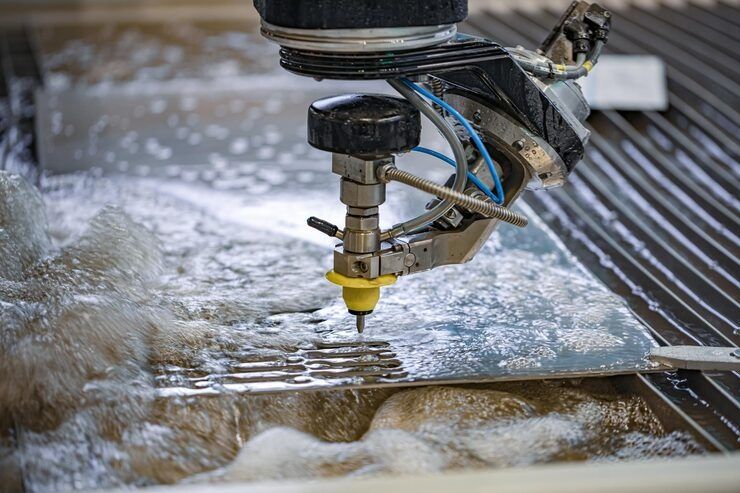
Water jet cutting machines are industrial systems that cut materials using a high-pressure stream of water, sometimes mixed with abrasive particles. Unlike thermal cutting methods, water jet cutting relies purely on mechanical erosion, allowing materials to be cut without heat-related effects.
These machines exist to address limitations found in traditional cutting processes. Heat-based cutting can cause distortion, material hardening, or microcracks, especially in sensitive or layered materials. Water jet technology was developed to provide a cold cutting method capable of handling a wide range of materials while preserving their original properties.
Water jet cutting machines are now widely used in industries that require clean edges, high dimensional accuracy, and flexibility across different material types.
Importance: Why Water Jet Cutting Matters Today
Water jet cutting machines play a vital role in modern manufacturing due to their versatility and precision.
Why this topic matters today:
-
No heat-affected zone: Maintains original material structure
-
Wide material compatibility: Handles metals, composites, stone, and more
-
Precision cutting: Supports tight tolerances and complex shapes
-
Reduced material waste: Narrow kerf width improves material usage
-
Process flexibility: Suitable for prototypes and production environments
These machines affect manufacturing engineers, fabrication planners, quality inspectors, designers, and industrial researchers. They solve problems related to thermal distortion, material damage, limited cutting versatility, and inconsistent edge quality.
Industries such as aerospace, automotive, architecture, electronics, mining, defense, and industrial fabrication rely on water jet cutting for both functional and aesthetic components.
Recent Updates: Industry Trends and Developments (2024–2025)
Over the past year, water jet cutting technology has advanced in efficiency, control precision, and sustainability.
| Year | Development or Trend | Industrial Impact |
|---|---|---|
| 2024 | Improved high-pressure pump efficiency | Reduced energy consumption |
| 2024 | Advanced motion control systems | Smoother cutting paths |
| 2025 | Enhanced abrasive recycling techniques | Improved resource utilization |
| 2025 | Better nozzle wear monitoring | More consistent cut quality |
Recent developments also include higher-pressure systems for faster cutting speeds, improved software-based motion planning (without operator complexity), and enhanced filtration systems to manage wastewater more effectively.
Laws, Standards, and Regulatory Influence
Water jet cutting machines are governed by industrial safety, environmental, and workplace regulations.
Common regulatory considerations include:
-
Machinery safety regulations: Guarding, emergency stops, and pressure containment
-
Workplace safety standards: Operator protection from high-pressure hazards
-
Environmental regulations: Water usage, filtration, and waste handling
-
Noise and vibration guidelines: Protecting operator health
In many regions, industries are encouraged to adopt cutting technologies that reduce emissions and thermal pollution, positioning water jet cutting as a favorable option for environmentally conscious manufacturing.
Process Basics: How Water Jet Cutting Machines Work
Water jet cutting machines operate by converting mechanical energy into an ultra-high-pressure water stream.
Basic process explained step by step:
-
Water is pressurized to extremely high levels using specialized pumps
-
The pressurized water passes through a small orifice
-
A focused jet exits at very high velocity
-
Abrasive particles may be added for harder materials
-
The jet erodes material along a programmed cutting path
Two main cutting modes are used:
-
Pure water jet cutting: Suitable for soft materials
-
Abrasive water jet cutting: Used for hard and thick materials
This process allows precise cutting without introducing heat into the workpiece.
Accuracy and Quality Factors
Accuracy is one of the defining strengths of water jet cutting machines.
Key factors influencing accuracy include:
-
Water pressure stability
-
Nozzle and orifice condition
-
Abrasive quality and flow consistency
-
Cutting speed and path control
-
Material thickness and hardness
Modern systems incorporate closed-loop control and position feedback to maintain consistent kerf width and dimensional accuracy across complex geometries.
Material Capabilities: What Can Be Cut
Water jet cutting machines are known for their exceptional material range.
| Material Category | Examples | Cutting Method |
|---|---|---|
| Metals | Steel, aluminum, titanium | Abrasive water jet |
| Stone and ceramics | Marble, granite, tiles | Abrasive water jet |
| Composites | Carbon fiber, fiberglass | Abrasive water jet |
| Soft materials | Rubber, foam, textiles | Pure water jet |
| Glass | Laminated and thick glass | Abrasive water jet |
The absence of thermal stress makes water jet cutting especially suitable for layered, brittle, or heat-sensitive materials.
Tools and Learning Resources
Understanding water jet cutting technology is supported by a variety of technical and educational resources.
Helpful learning resources include:
-
Manufacturing engineering textbooks
-
Industrial cutting process handbooks
-
Materials science reference guides
-
Technical journals on non-thermal machining
-
Workplace safety manuals
Reference tools commonly used:
-
Material cutting speed charts
-
Kerf width reference tables
-
Abrasive flow rate guides
-
Dimensional inspection checklists
These resources help learners and professionals understand process limitations and optimization strategies.
Frequently Asked Questions
What makes water jet cutting different from laser or plasma cutting?
Water jet cutting does not use heat, preventing thermal distortion and material hardening.
Is water jet cutting accurate for detailed shapes?
Yes. It supports precise contours and complex geometries with consistent edge quality.
Can water jet machines cut thick materials?
Yes. With abrasive assistance, very thick and dense materials can be processed.
Does the process damage material surfaces?
When properly controlled, it produces clean edges with minimal surface damage.
Why is abrasive added to water jets?
Abrasives increase cutting power, allowing harder materials to be eroded effectively.
Conclusion
Water jet cutting machines are highly versatile tools that enable precise, heat-free material processing across a wide range of industries. Their ability to cut diverse materials without altering mechanical properties makes them especially valuable in applications where quality and integrity are critical.
As technology continues to advance through better pressure control, improved efficiency, and enhanced sustainability practices, water jet cutting remains a key solution in modern manufacturing. Understanding its working principles, accuracy factors, and material capabilities provides valuable insight into one of the most adaptable cutting technologies available today.