Guide to Industrial Dust Collectors: Working Principles, Types, and Informative Details
Industrial dust collectors are engineered systems designed to capture, filter, and remove airborne particles generated during manufacturing and material-handling activities. These particles may include metal dust, wood fibers, cement powder, chemical residues, grain particles, or mineral dust.
They exist because industrial processes naturally release fine particulates into the air. Without control, these particles can reduce air quality, affect equipment performance, and create unsafe working conditions. Dust collectors help industries maintain cleaner air, protect infrastructure, and support compliance with environmental and occupational standards.
From heavy manufacturing plants to food processing units, dust collection systems play a foundational role in modern industrial environments.
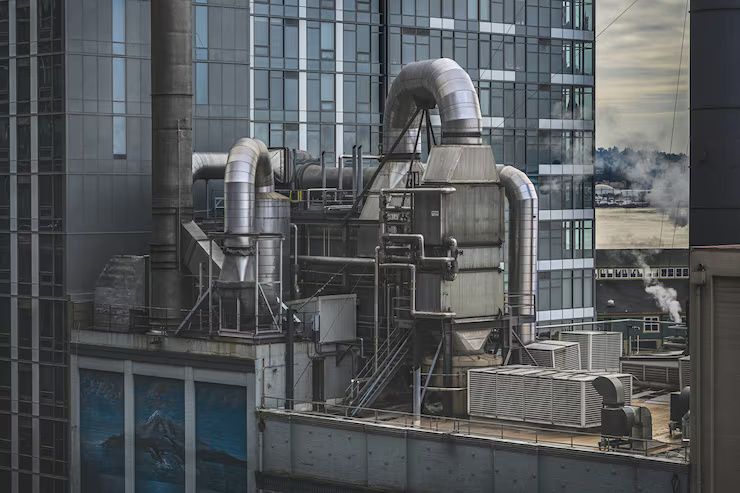
Importance: Why Industrial Dust Collection Matters Today
Industrial dust collection has become increasingly important due to stricter safety expectations, environmental awareness, and productivity requirements.
Key reasons this topic matters today:
-
Worker Health Protection: Fine dust can enter respiratory systems and cause long-term health concerns.
-
Fire and Explosion Risk Reduction: Combustible dust accumulation increases ignition hazards.
-
Equipment Longevity: Dust buildup accelerates wear on motors, bearings, and control components.
-
Environmental Responsibility: Cleaner emissions reduce industrial impact on surrounding areas.
-
Operational Efficiency: Cleaner air improves visibility, accuracy, and overall workflow reliability.
Industries affected include manufacturing, pharmaceuticals, food processing, woodworking, cement plants, mining, and metal fabrication. Dust collectors solve problems related to air contamination, regulatory pressure, and operational reliability.
Recent Updates: Trends and Developments (2024–2025)
In the past year, industrial dust collection systems have seen meaningful advancements focused on efficiency, safety, and sustainability.
| Year | Development | Industry Impact |
|---|---|---|
| 2024 | High-efficiency filter media | Improved capture of fine particulate matter |
| 2024 | Energy-optimized airflow design | Reduced power consumption per filtration cycle |
| 2025 | Smart pressure monitoring | Better filter lifespan tracking |
| 2025 | Compact modular collectors | Easier integration in space-limited facilities |
Recent studies published in 2024 industrial safety journals highlighted improved capture rates for particles below 2.5 microns, addressing growing concerns around fine dust exposure. There is also a noticeable shift toward low-maintenance filtration assemblies that reduce downtime and manual intervention.
Laws, Policies, and Regulatory Influence
Industrial dust collectors are strongly influenced by workplace safety and environmental protection regulations across multiple regions.
Common regulatory frameworks include:
-
OSHA (United States): Sets permissible exposure limits for airborne contaminants.
-
EPA Clean Air Act: Governs particulate emissions released into the environment.
-
EU ATEX Directives: Address explosive dust environments in industrial facilities.
-
ISO 14001: Environmental management standards influencing dust control practices.
-
National Factory Safety Acts (India): Mandate dust mitigation in hazardous work zones.
These regulations encourage the use of effective filtration systems, proper exhaust management, and regular system inspections. Facilities operating in high-dust environments are often required to maintain documented dust control measures.
Types of Industrial Dust Collectors and How They Work
Different industrial settings require different dust collection approaches. Each type operates on a specific physical principle.
| Dust Collector Type | Working Principle | Common Applications |
|---|---|---|
| Cyclone Collectors | Centrifugal force separates heavy particles | Cement, mining, grain handling |
| Baghouse Collectors | Fabric filtration traps fine dust | Power plants, steel manufacturing |
| Cartridge Collectors | Pleated filter media for compact filtration | Metalworking, pharmaceuticals |
| Wet Scrubbers | Water droplets capture dust particles | Chemical processing |
| Electrostatic Precipitators | Electrical charge attracts particles | Large industrial exhaust systems |
Each system is selected based on dust size, temperature, moisture content, and explosion risk. Proper selection ensures high filtration efficiency and stable performance.
Tools and Resources for Better Understanding
Learning about industrial dust collectors is supported by several practical and educational resources.
Helpful tools and references include:
-
Airflow and duct sizing calculation charts
-
Particle size classification reference tables
-
Industrial ventilation design handbooks
-
Maintenance inspection checklist templates
-
Pressure differential monitoring guides
-
Environmental compliance documentation frameworks
Knowledge platforms and references:
-
Occupational safety research publications
-
Engineering textbooks on industrial ventilation
-
Environmental agency technical guidelines
-
Manufacturing safety training manuals
These resources help engineers, plant managers, and safety professionals understand system behavior, performance limits, and compliance expectations.
Frequently Asked Questions (FAQs)
What is the primary function of an industrial dust collector?
Its primary function is to remove airborne dust and particulate matter from industrial environments to improve air quality and safety.
How do dust collectors improve workplace safety?
They reduce inhalation risks, prevent dust accumulation, and minimize fire or explosion hazards caused by combustible particles.
Are dust collectors required by law?
In many regions, regulations require dust control systems where airborne particulate exposure exceeds defined safety limits.
What factors influence dust collector selection?
Key factors include particle size, dust volume, air temperature, moisture content, and explosion sensitivity.
Do dust collectors support environmental goals?
Yes. By reducing emissions and improving air cleanliness, they support environmental protection and sustainability objectives.
Conclusion
Industrial dust collectors are a critical component of modern industrial infrastructure. They protect human health, enhance equipment reliability, and support regulatory compliance across multiple sectors. As industries continue to evolve, dust collection systems are becoming more efficient, compact, and environmentally aligned.
Understanding how these systems work, the regulations that govern them, and the resources available for learning allows organizations to maintain cleaner, safer, and more sustainable operations. Industrial dust collection is no longer optional—it is a foundational requirement for responsible industrial activity.