Exploring Smart Ring Technology: Facts, Capabilities, and Practical Knowledge
Smart ring technology refers to compact wearable devices designed in the form of a ring that incorporate miniature sensors, processing components, and connectivity features. These rings are worn on a finger and are capable of collecting data related to movement, body signals, and environmental interactions.
The idea behind smart rings emerged from the growing demand for less intrusive wearable technology. While wrist-worn devices gained popularity, many users sought an alternative that was lighter, discreet, and suitable for continuous wear. The finger provides a stable location for detecting pulse, skin temperature, and motion, making it a practical choice for biometric sensing.
Smart rings exist to bridge the gap between health monitoring, digital interaction, and everyday convenience, without requiring bulky hardware or constant user attention.
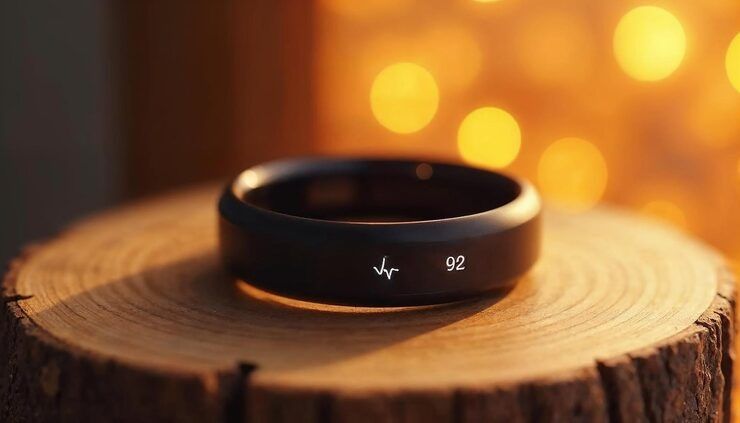
Importance: Why Smart Ring Technology Matters Today
Smart ring technology has gained attention because it addresses several modern challenges related to health awareness, digital identity, and personal data tracking.
Why it matters in today’s environment
-
Continuous monitoring: Rings can be worn day and night, enabling long-term data collection
-
Minimal interference: Their small form factor reduces discomfort during daily activities
-
Health awareness: Supports early recognition of changes in physical patterns
-
Digital security: Some smart rings are used for identity verification and access control
-
Lifestyle insights: Helps users understand sleep patterns, activity levels, and recovery trends
This technology affects a wide range of people, including individuals focused on wellness, researchers studying human behavior, and organizations exploring secure authentication methods. Smart rings help solve problems related to data consistency, wearability fatigue, and privacy-conscious monitoring.
Recent Updates: Trends and Developments in the Past Year
Over the last year, smart ring technology has advanced mainly in sensor accuracy, power efficiency, and data interpretation.
| Year | Development | Industry Impact |
|---|---|---|
| 2024 | Improved optical sensors | More reliable heart-rate and oxygen tracking |
| 2024 | Enhanced battery materials | Longer usage time in compact designs |
| 2025 | AI-assisted pattern analysis | Better interpretation of sleep and activity data |
| 2025 | Medical research integration | Increased use in academic health studies |
Recent developments also show growing interest in non-invasive health tracking, where smart rings are evaluated for long-term wellness observation rather than short-term measurements. Some research initiatives in 2024–2025 explored their use in fatigue detection, stress indicators, and recovery monitoring.
Laws and Policies: How Regulations Affect Smart Ring Technology
Smart ring technology operates within broader frameworks related to data protection, consumer electronics, and health information handling.
Key regulatory considerations
-
Data protection laws:
-
GDPR (European Union) governs personal data collection and processing
-
Similar privacy frameworks exist in India, the US, and other regions
-
-
Medical device classification:
-
If a smart ring claims medical diagnostic capability, it may fall under medical device regulations
-
Informational and wellness-focused devices are generally regulated as consumer electronics
-
-
Wireless communication standards:
-
Must comply with radio frequency and electromagnetic safety rules
-
Certification is required for wireless transmission in most countries
-
Governments and regulatory bodies emphasize transparency, user consent, and secure data handling, especially when biometric information is involved.
Tools and Resources: Helpful Ways to Learn More
Understanding smart ring technology is easier with reliable educational and technical resources.
Learning and reference resources
-
Academic journals on wearable sensing and human-computer interaction
-
University research publications on biometric signal processing
-
Consumer electronics standards documentation
-
Health technology white papers and case studies
Practical knowledge tools
-
Sensor signal interpretation charts
-
Wearable ergonomics studies
-
Battery efficiency comparison tables
-
Open research datasets related to activity and sleep monitoring
These resources help readers develop technical awareness and practical understanding without requiring advanced engineering knowledge.
Capabilities: What Smart Rings Are Designed to Do
Smart rings are built to perform multiple functions within a very small physical space.
Common capabilities include
-
Motion tracking: Detects steps, gestures, and movement patterns
-
Heart-rate sensing: Uses optical sensors to measure blood flow signals
-
Sleep analysis: Observes sleep stages and rest consistency
-
Skin temperature trends: Tracks variations that may reflect physiological changes
-
Secure interaction: Enables contactless identification and authentication
Unlike larger wearables, smart rings focus on passive data collection, meaning they gather information quietly in the background without frequent user input.
FAQs: Common Questions About Smart Ring Technology
What makes smart rings different from other wearables?
Smart rings are smaller, lighter, and designed for continuous wear with minimal interference in daily activities.
Are smart rings accurate for health tracking?
They are effective for trend observation and general insights. Accuracy depends on sensor quality and proper usage.
Can smart rings replace medical devices?
No. They provide informational data and are not intended for diagnosis or treatment decisions.
How long can smart rings typically be worn?
Most are designed for long-term wear, including sleep, due to their lightweight structure.
Do smart rings collect personal data?
Yes, they collect biometric and activity data, which is why data protection and user consent are important.
Conclusion
Smart ring technology represents a significant step toward subtle, continuous, and user-friendly wearable systems. By combining compact design with advanced sensing capabilities, smart rings offer valuable insights into daily activity, rest, and physical patterns without disrupting normal routines.
As research, materials, and data analysis methods continue to evolve, smart rings are likely to play an expanding role in wellness awareness, digital interaction, and personal technology ecosystems. Understanding how they work, how they are regulated, and what they can realistically offer helps users and learners approach this technology with clarity and confidence.