Exploring Industrial 3D Scanners: Advanced Technology, Accuracy, and Informative Facts
Industrial 3D scanners are devices used to capture the shape and dimensions of physical objects and convert them into digital models. These systems rely on technologies such as laser scanning, structured light, or photogrammetry to record precise measurements. The concept developed alongside advances in computer-aided design and manufacturing, where accurate digital representations became essential for production and analysis.
The purpose of industrial 3D scanners is to bridge the gap between the physical and digital worlds. By transforming real objects into detailed data, industries can analyze designs, inspect components, and improve processes. Over time, improvements in computing power and sensor technology have made these scanners more accurate and widely accessible across various sectors.
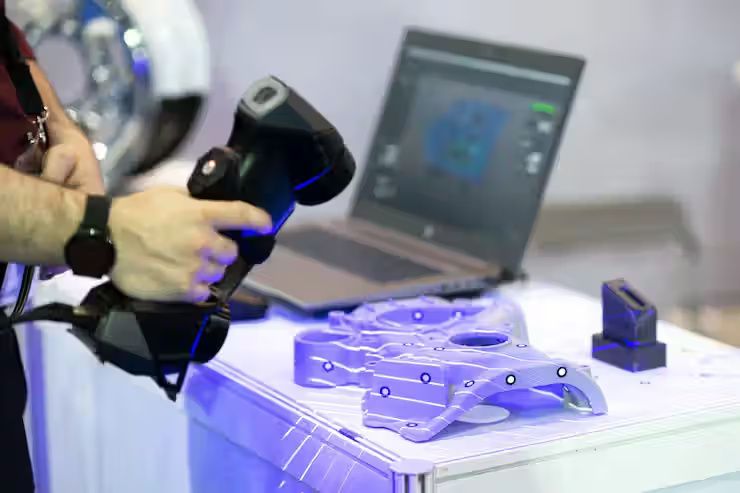
Industrial 3D scanners are now used in fields such as automotive manufacturing, aerospace engineering, healthcare, construction, and cultural preservation. Their role continues to expand as industries increasingly rely on digital workflows.
Importance
Industrial 3D scanners play a significant role in modern production and quality control. They help ensure that parts and structures match design specifications, reducing errors and material waste. This is especially important in industries where precision is critical, such as aerospace or medical device manufacturing.
For everyday people, the impact of this technology may not always be visible, but it influences the reliability and safety of many products. For example, accurately scanned components can lead to better-fitting mechanical parts or improved structural designs in buildings.
Key areas where industrial 3D scanners make a difference include:
- Manufacturing accuracy: ensuring parts meet exact dimensions and tolerances
- Product development: supporting faster design adjustments and prototyping
- Maintenance and repair: enabling reverse engineering of worn or damaged components
- Cultural preservation: digitizing historical artifacts for documentation and study
These applications help address challenges such as production inefficiencies, design errors, and the need for detailed documentation.
Recent Updates
Recent developments in industrial 3D scanners have focused on improving speed, portability, and integration with digital systems. Many modern scanners are now more compact and easier to use, allowing them to be deployed in field environments rather than only in controlled settings.
Advancements in artificial intelligence and machine learning have also influenced scanning technology. These systems can automatically process scan data, identify patterns, and improve accuracy with less manual input. This reduces the time required to convert raw scans into usable digital models.
Another noticeable trend is the integration of 3D scanning with cloud-based platforms. This allows teams in different locations to access and analyze scan data in real time. As industries continue to adopt digital transformation strategies, industrial 3D scanners are becoming part of larger connected systems.
Sustainability has also become a consideration. By improving measurement accuracy and reducing errors, these scanners contribute to more efficient use of materials and resources.
Laws or Policies
The use of industrial 3D scanners is influenced by various standards and regulations, depending on the country and industry. In India, manufacturing and engineering practices often align with guidelines from organizations such as the Bureau of Indian Standards (BIS). These standards help ensure consistency and reliability in measurement and production processes.
Data protection laws may also apply when 3D scanning involves sensitive designs or proprietary information. Companies must follow regulations related to data storage and sharing, especially when using cloud-based systems.
In sectors like healthcare or aerospace, stricter compliance requirements may exist. For example:
- Quality standards: ensuring scanned data meets required accuracy levels
- Safety regulations: verifying that scanned components meet structural requirements
- Documentation rules: maintaining records for inspections and audits
International standards, such as ISO guidelines for metrology and quality management, are often followed to maintain compatibility across global supply chains.
Tools and Resources
A range of tools and resources support the use of industrial 3D scanners. These tools help process scan data, create digital models, and analyze results.
Common categories include:
- Scanning software: used to control devices and capture raw data
- Data processing tools: convert point clouds into 3D models
- CAD integration platforms: allow scanned data to be used in design workflows
- Measurement analysis tools: compare scanned objects with original designs
Below is a simple overview of common types of industrial 3D scanning technologies:
| Technology Type | How It Works | Typical Use Case |
|---|---|---|
| Laser Scanning | Uses laser beams to measure surfaces | Large structures, engineering |
| Structured Light | Projects light patterns on objects | Small to medium components |
| Photogrammetry | Uses multiple images for reconstruction | Outdoor or large-scale scanning |
In addition to software, training materials and technical documentation are often available from industry organizations and educational institutions. These resources help users understand scanning techniques and improve accuracy.
FAQs
What are industrial 3D scanners used for?
Industrial 3D scanners are used to capture detailed measurements of physical objects and convert them into digital models. These models are used for inspection, design, and analysis in various industries.
How accurate are industrial 3D scanners?
The accuracy of industrial 3D scanners depends on the technology used and the environment. Many systems can measure within very small tolerances, making them suitable for precision tasks such as quality control.
What industries use industrial 3D scanners?
Industries such as automotive, aerospace, construction, healthcare, and manufacturing commonly use industrial 3D scanners for design validation, inspection, and documentation.
Are industrial 3D scanners difficult to use?
Modern industrial 3D scanners are designed to be more user-friendly than earlier versions. However, proper training is often needed to ensure accurate data capture and interpretation.
What is the difference between laser and structured light scanners?
Laser scanners use focused beams to measure distances, while structured light scanners project patterns onto objects to capture their shape. Each method has advantages depending on the size and complexity of the object being scanned.
Conclusion
Industrial 3D scanners have become an important tool for connecting physical objects with digital systems. They support accurate measurement, efficient production, and detailed analysis across multiple industries. Ongoing developments continue to improve their usability and integration with modern technologies. As industries evolve, these scanners remain a key part of digital workflows and precision engineering.