Exploring Industrial 3D Scanners: Advanced Technology, Accuracy, and Informative Facts
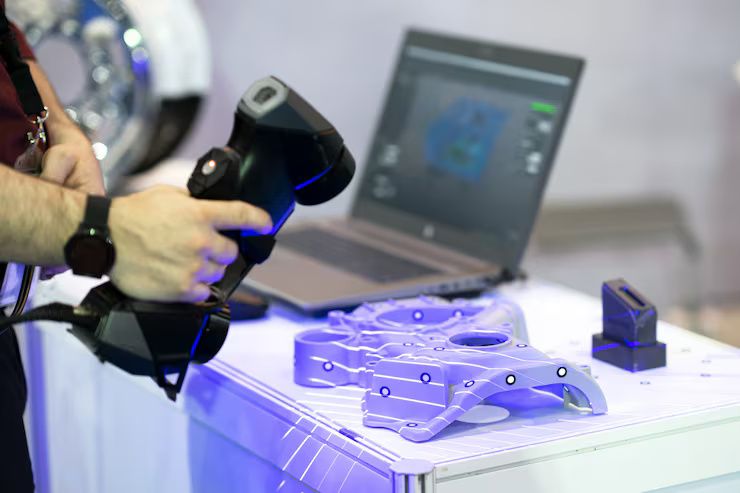
Industrial 3D scanners are precision measurement systems used to capture the shape, size, and geometry of physical objects and convert them into accurate digital models. They exist to address a long-standing challenge in manufacturing and engineering: reliably measuring complex forms that are difficult or time-consuming to assess with traditional tools.
Unlike manual gauges or contact probes, 3D scanners collect millions of data points in a short time, creating a detailed “point cloud” or mesh. This digital representation supports inspection, documentation, and analysis across many industries. As products become more intricate and tolerances tighter, non-contact measurement has become essential for accuracy and repeatability.
Importance: Why Industrial 3D Scanners Matter Today
Industrial 3D scanning matters because modern production depends on precision, speed, and data consistency. These systems influence a wide range of stakeholders, including design engineers, quality teams, production planners, and maintenance specialists.
Key problems they help solve include:
-
Complex geometry measurement: Capturing freeform surfaces, internal features, and fine details.
-
Quality assurance: Verifying dimensions against design intent to reduce defects.
-
Process efficiency: Shortening inspection cycles and minimizing rework.
-
Digital traceability: Creating records for compliance and lifecycle analysis.
-
Reverse engineering: Reconstructing digital models from existing components.
Industries such as automotive, aerospace, heavy machinery, energy, and medical manufacturing rely on 3D scanners to maintain tight tolerances while meeting production timelines.
Recent Updates: Trends and Developments (Past Year)
Over the last year, industrial 3D scanning has continued to evolve with notable technical improvements.
| Year | Update or Trend | What Changed |
|---|---|---|
| 2024 | Higher-resolution sensors | Improved capture of fine edges and surface textures |
| 2024 | Faster data processing | Reduced scanning and analysis time |
| 2025 | Improved portability | Lighter handheld systems for on-site measurement |
| 2025 | Better surface adaptability | More reliable scanning on dark, reflective, or rough materials |
Another important trend is the growing alignment between scanning systems and digital manufacturing workflows. Improved calibration routines and environmental compensation help maintain accuracy on factory floors where temperature and vibration vary.
Laws, Policies, and Standards Affecting Industrial 3D Scanning
Industrial 3D scanners operate within established measurement and safety frameworks to ensure reliability and comparability.
Commonly referenced standards and guidelines include:
-
ISO 10360: Performance testing standards for coordinate measurement systems, including optical devices.
-
VDI/VDE 2634: Guidelines for evaluating optical 3D measuring systems.
-
ISO 9001 (Quality Management): Requires traceable and validated measurement processes.
-
Workplace safety regulations: Address laser classification, eye protection, and controlled environments.
In many regions, manufacturing quality programs and national metrology institutes encourage the use of standardized measurement systems to improve product consistency and international compatibility.
Tools and Learning Resources Related to Industrial 3D Scanning
A variety of educational and technical resources support understanding and effective use of industrial 3D scanners.
Knowledge and Learning Sources
-
Manufacturing engineering textbooks covering optical metrology
-
University courses on dimensional measurement and quality engineering
-
Industry journals focused on metrology and inspection technologies
-
Technical webinars explaining scanning principles and accuracy verification
Reference Aids
-
Accuracy and resolution comparison charts
-
Environmental influence guides (temperature, vibration, lighting)
-
Calibration and verification checklists
-
Sample inspection reports showing best-practice documentation
Practical Evaluation Tools
-
Test artifacts for accuracy validation
-
Surface preparation guides for challenging materials
-
Alignment and reference target layouts
These resources help users understand both theoretical principles and real-world application considerations.
How Accuracy Is Defined and Evaluated
Accuracy in industrial 3D scanning is typically described through multiple factors rather than a single value.
Common accuracy-related terms include:
-
Trueness: How close measurements are to the actual value.
-
Repeatability: Consistency of results across multiple scans.
-
Resolution: The smallest detectable feature size.
-
Volumetric accuracy: Performance across larger measurement volumes.
Accuracy depends on scanner type, calibration quality, environmental stability, and operator technique. Proper verification using known reference artifacts is essential for dependable results.
FAQs: Clear Answers to Common Questions
What types of industrial 3D scanners exist?
Common types include laser triangulation scanners, structured light scanners, and time-of-flight systems. Each is suited to different object sizes, materials, and accuracy needs.
Can 3D scanners handle large components?
Yes. Some systems are designed for small precision parts, while others scan large structures such as vehicle bodies or industrial assemblies.
How do surface properties affect scanning?
Highly reflective, transparent, or very dark surfaces can be challenging. Specialized settings, surface preparation methods, or alternative scanning technologies are often used.
Are industrial 3D scanners suitable for inspection?
They are widely used for inspection when properly calibrated and verified against recognized standards.
What skills are important for effective scanning?
Understanding measurement principles, proper setup, environmental control, and data interpretation are all critical for reliable outcomes.
Conclusion
Industrial 3D scanners have become a foundational tool in modern manufacturing and engineering. By enabling fast, accurate, and non-contact measurement of complex forms, they support quality assurance, process optimization, and digital documentation. Recent advances in sensor performance, portability, and data handling continue to expand their practical value.
Understanding how these systems work, how accuracy is defined, and how standards apply helps organizations and learners make informed decisions and maintain confidence in measurement results. As products and processes grow more complex, industrial 3D scanning will remain a key contributor to precision, efficiency, and consistency across industries.